Why These Mountains Matter for Birds
The high-altitude zones of Ladakh and Spiti create unique conditions. Temperatures drop to -25°C in winter. Oxygen is thin. Food is scarce. Only specialized birds survive here.
Many of these species live above 3,000 meters year-round. Some go even higher in summer. Winter brings them down to lower valleys where blue sheep and other prey animals gather. That’s the same reason snow leopards move lower, which is why your trek timing works for both.
Top 10 Birds You’ll See
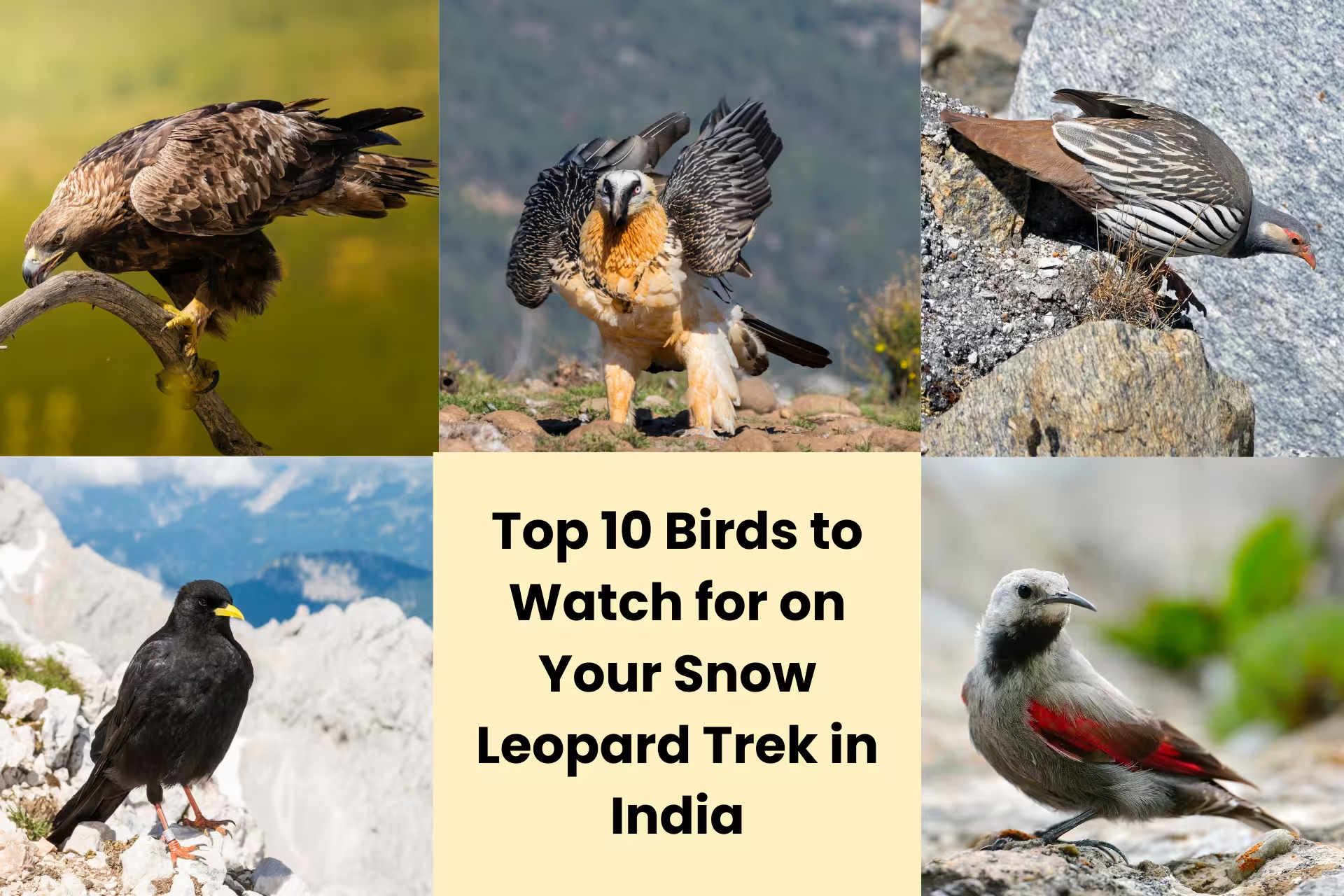
Lammergeier (Bearded Vulture)
This is the bird everyone wants to see. Lammergeiers have a 3-meter wingspan and look prehistoric in flight.
Their name comes from the dark feathers under their chin that look like a beard. Adults have orange-cream colored bodies and dark wings. Young birds are darker all over.
What makes them special is their diet. They eat bones. After other scavengers finish with a carcass, lammergeiers pick up the leftover bones and drop them from great heights onto rocks. The bones shatter, and the birds eat the marrow inside.
You’ll see them soaring on thermals, often alone or in pairs. They patrol valleys looking for food. Watch for their diamond-shaped tail in flight, which separates them from other large birds.
Best spots: Rumbak Valley, Ulley Valley, and the slopes around Hemis. Morning and late afternoon when thermals form.
Photography tip: They fly high, so you need at least 400mm. Shoot against blue sky for clean backgrounds.
Golden Eagle
Golden eagles are huge. Females can have wingspans over 2 meters. They’re dark brown with lighter golden-brown feathers on their head and neck.
These eagles hunt the same prey as snow leopards. Blue sheep, marmots, and woolly hares. Your guides will often spot eagles first, then check what they’re watching. Sometimes it leads to predator activity.
In flight, they hold their wings in a slight V-shape. Their tail is longer than a vulture’s and fans out when they soar. You’ll see them riding updrafts along ridges or perched on rocky outcrops scanning for prey.
They’re territorial, so if you see one in an area, you’ll likely see it again during your trek.
Best spots: All major snow leopard areas. Hemis, Spiti, and Ulley all have resident pairs.
Photography tip: Catch them when they’re hunting. The wing positions and focus in their eyes make powerful shots.
Himalayan Snowcock
You’ll hear these birds before you see them. They make loud, cackling calls that echo across valleys. The sound is distinctive and carries far in the thin mountain air.
Himalayan snowcocks are chicken-sized birds that live on rocky slopes. They’re grey-brown with white and chestnut streaking. In winter, they move in groups of 5-15 birds.
They feed on the ground, picking at exposed vegetation and seeds. When startled, they run uphill rather than fly. If they do take off, they glide downslope on set wings.
Look for them on south-facing slopes where sun melts some snow and exposes food. Early morning is best.
Best spots: Common throughout Ladakh and Spiti above 3,500 meters.
Photography tip: They’re well camouflaged. Watch for movement, then wait for them to move into better light.
Tibetan Snowcock
Tibetan snowcocks look similar to Himalayan snowcocks but prefer higher elevations. They stay above 4,500 meters most of the year.
The call is different. More melodic, less harsh. Once you learn both calls, you can identify them by sound alone.
These birds are slightly larger than their Himalayan cousins with more pronounced white streaking on their flanks. They behave the same way, running uphill and gliding down when disturbed.
You’ll see them less often simply because they live higher where trekking is harder.
Best spots: High passes and ridges in Spiti and eastern Ladakh.
Photography tip: The altitude makes hiking tough. If you find them, take your time getting shots. You might not see them again.
Alpine Chough (Yellow-Billed)
These are the entertaining birds of the mountains. Alpine choughs are completely black with bright yellow bills and red legs. They fly in flocks, performing acrobatic stunts for no apparent reason other than fun.
They’re smart and curious. Around camps and villages, they investigate everything. They’ll land near you, watch what you’re doing, and check if you have food.
Their flight is playful. They dive, roll, and chase each other through the air. On windy days, they ride updrafts with their wings barely moving.
You’ll see them daily. They’re one of the few birds that seem unbothered by human presence.
Best spots: Everywhere. Villages, camps, monasteries, and remote valleys.
Photography tip: Easy subjects. They come close and their yellow bills pop against dark plumage. Try flight shots on windy days.
Common Raven
Ravens are massive compared to regular crows. They’re intelligent, vocal, and always around.
All black with thick bills and shaggy throat feathers. Their call is a deep croak, nothing like a crow’s caw. They often fly in pairs and mate for life.
Ravens scavenge but also hunt. They’ll follow predators hoping for leftovers. They cache food in rock crevices. And they play, sliding down snow slopes just for enjoyment.
Watch them interact with each other. They communicate constantly through calls and body language.
Best spots: Common everywhere, especially near human activity.
Photography tip: Get them doing something interesting. Ravens eating or interacting make better shots than simple portraits.
Himalayan Griffon Vulture
These vultures are enormous. Wingspan can reach 3 meters. They soar for hours without flapping, riding thermals to scan for dead animals.
Light brown body with a white ruff around the neck. In flight, look for their broad wings held flat and a short, square tail.
They gather at carcasses in groups. When one spots food and descends, others notice and follow. You might see 20 or more around a large carcass.
They serve a critical role in these mountains, cleaning up dead livestock and wildlife. Without them, disease would spread faster.
Best spots: Open valleys where they can spot carcasses. Common in Hemis and Spiti.
Photography tip: Soaring shots work well. Position yourself on ridges where they pass at eye level.
Wallcreeper
If you see a wallcreeper, count yourself lucky. They’re not rare, but they’re easy to miss.
Small bird, grey body with bright crimson wing patches that flash when they fly. They cling to vertical rock faces, probing cracks for insects with their thin, curved bill.
Their flight looks like a butterfly. They flutter between rock faces with broad, rounded wing beats.
Look for them on cliffs near streams or rivers. They move constantly, flitting from spot to spot.
Best spots: Rocky gorges and cliff faces in lower valleys. Check monastery walls.
Photography tip: Tough to photograph. They don’t stay still long. Pre-focus on a promising wall and wait.
White-Winged Redstart
This bird is everywhere near water. Males are stunning: black body with bright white wing patches and a rusty-red tail. Females are grey-brown but show the same white wing pattern in flight.
They live along streams and rivers, hopping on rocks and catching insects. Their tail constantly flicks up and down, which makes them easy to spot.
Active and approachable. They’ll go about their business even when you’re close.
Best spots: Any stream or river. Guaranteed sightings in places like Rumbak and Ulley valleys.
Photography tip: Easy subjects. Good light on sunny mornings makes their colors pop.
Robin Accentor
Small, streaky brown bird that you’ll see everywhere. They hop around rocks and scree slopes looking for seeds and insects.
Nothing flashy about their appearance, but they’re cheerful and constantly active. Often in small groups.
What makes them worth mentioning is their reliability. You’ll see robin accentors every single day of your trek. They adapt to all altitudes and conditions.
They’re also bold. They’ll come close to camps and don’t spook easily.
Best spots: Literally everywhere from 3,000 to 5,500 meters.
Photography tip: Not a priority bird for most photographers, but their behavior makes them good practice subjects.
Birds by Location
Hemis National Park You’ll see all 10 birds here. Rumbak Valley is excellent for lammergeiers and golden eagles. Snowcocks call from slopes above camp. Water birds like white-winged redstarts are along all streams.
Spiti Valley Tibetan snowcocks are more common here than Himalayan. Wallcreepers appear in Kibber gorge. Alpine choughs flock around villages. Eagles patrol the high ridges.
Ulley Valley Lammergeiers are reliable. Ravens hang around the village. Snowcocks on surrounding slopes. The stream running through the valley attracts redstarts and dippers.
Best Times to See These Birds
Winter (December to March)
This is snow leopard season and also when bird watching is best. Most birds have moved to lower elevations following prey animals. Concentrations are higher.
Lammergeiers are very active. Snowcocks gather in larger groups. Eagles hunt more aggressively because prey is concentrated.
Cold is harsh. Batteries die fast. But light is crisp and clear for photography.
Spring and Summer (April to August)
Birds spread out. Many move higher as snow melts and food becomes available at elevation. Breeding season means more territorial behavior and calling.
You’ll see different species. Some migrants appear. But overall numbers in typical trekking areas drop.
Bird Watching While Snow Leopard Tracking
Birds and snow leopard tracking work well together. You’re already sitting still, scanning slopes. Just expand what you’re looking for.
Lammergeiers sometimes lead to action. If one drops fast and lands, something might have died. Could be natural death, could be a kill. Your guides will investigate.
Eagles hunting the same prey as snow leopards use similar terrain. If eagles are active on a slope, conditions are good for predators.
The long waits during tracking are perfect for bird watching. You’re positioned on ridges with clear views. Bring binoculars and a field guide.
What to Bring
Good binoculars help enormously. 10×42 is ideal. Lightweight enough to carry, powerful enough to identify birds at distance.
A basic field guide or bird app. “Birds of the Indian Subcontinent” by Grimmett and Inskipp covers everything you’ll see. Download offline versions of apps before you go. No cell signal in these mountains.
Small notebook if you want to track sightings. Most people just enjoy watching, but keeping a list adds satisfaction.
Don’t let bird watching distract from snow leopards. But when nothing’s happening on the leopard front, birds keep the day interesting.
Final Thoughts
On a typical 10-day snow leopard trek, you’ll see 30-50 bird species if you pay attention. These 10 are the ones you’re almost guaranteed to encounter.
Bird watching makes you a better wildlife observer. You learn to scan landscapes systematically. You notice movement faster. You understand animal behavior better. All of this helps when tracking snow leopards.
The birds also fill the gaps. Snow leopard tracking involves lots of waiting. Having birds to watch transforms downtime into active observation.
And honestly, these mountains are about more than one species. The lammergeier soaring overhead, the snowcock calling from a distant slope, the choughs playing in the wind – they’re all part of what makes these places special.
Bring binoculars. Pay attention. The birds will show you things you’d otherwise miss.