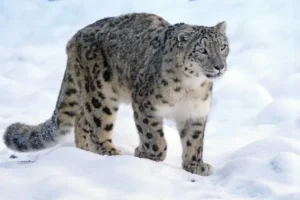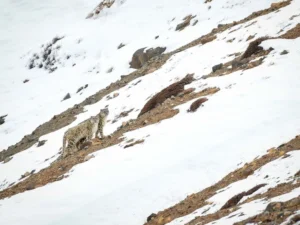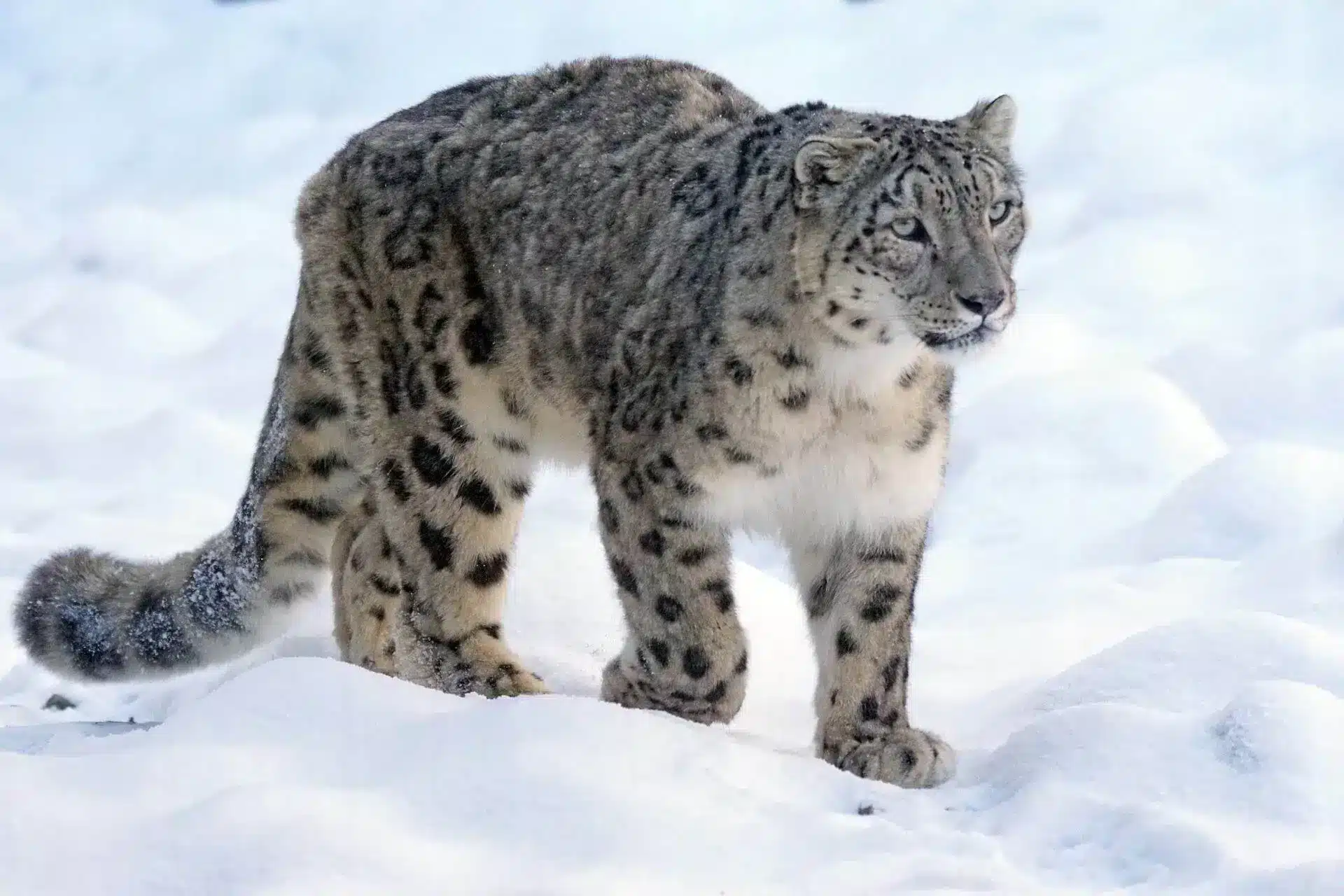

Gliding high above the rugged Himalayan landscape, the Golden Eagle stands out as one of the most powerful birds of prey on the planet. Known for its sharp vision, fast dives, and incredible hunting skill, this majestic raptor rules the skies. It shares its remote mountain home with another legendary predator, the snow leopard. Together, these two fierce hunters represent the spirit of strength and survival in one of the world’s most unforgiving wildernesses.
Physical Characteristics
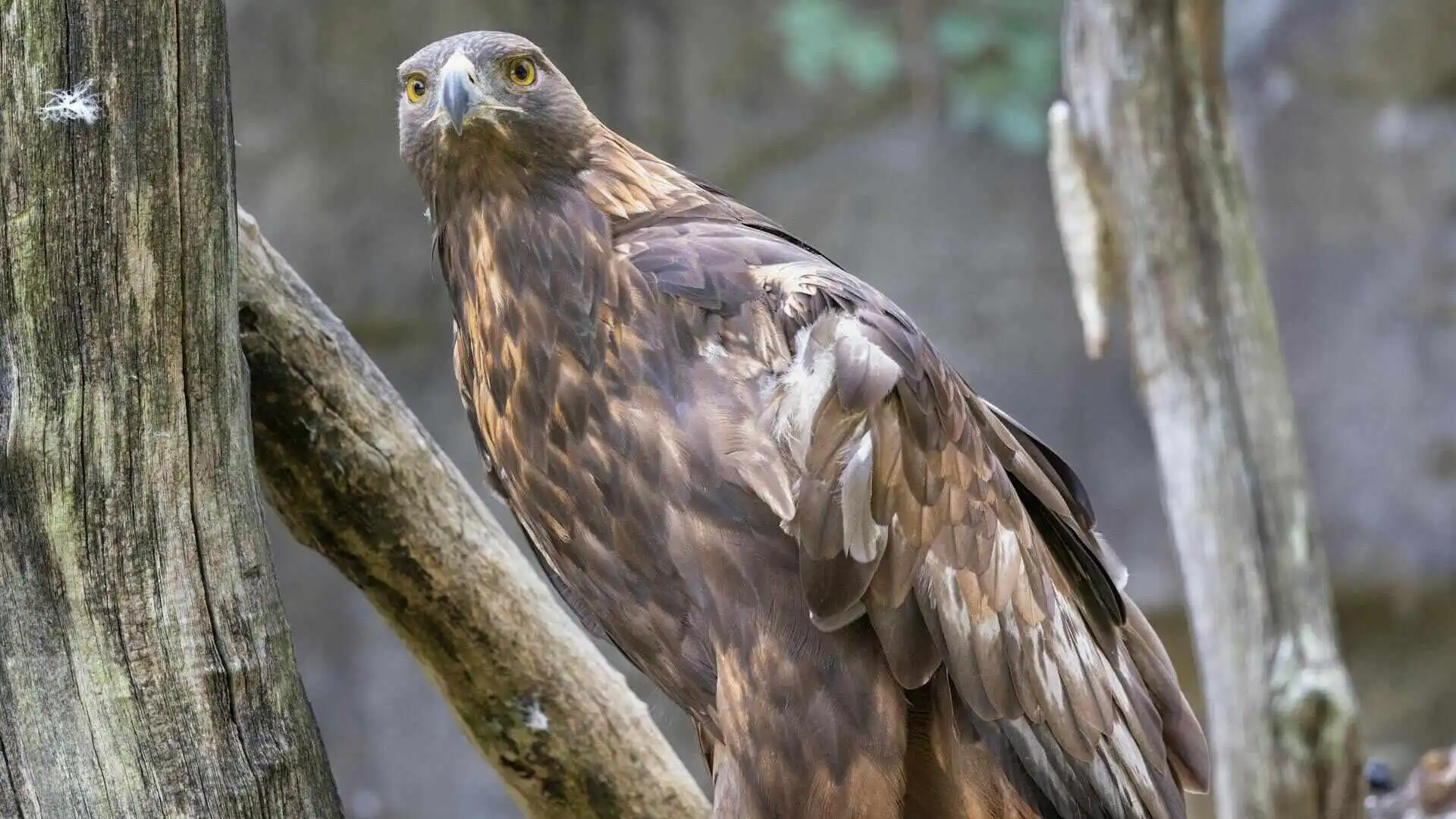
The Golden Eagle is a large and powerful bird of prey with striking features. Its plumage is primarily dark brown, with a golden-brown sheen on the back of the head and neck, which gives it its name. The eagle's wingspan ranges from 1.8 to 2.3 meters, allowing it to soar gracefully through the skies. Its head is adorned with sharp, piercing eyes and a strong, hooked beak, perfect for tearing into prey. The eagle's legs are feathered, and its talons are strong and curved, designed to grasp and carry heavy prey. The tail is short and rounded, providing excellent control during flight.
Quick Facts
| Feature | Details |
|---|---|
| Scientific Name | Aquila chrysaetos |
| Wingspan | 1.8–2.3 meters |
| Weight | 3–6.5 kg (females larger) |
| Habitat | Mountains, cliffs, grasslands |
| Diet | Mammals, birds, carrion |
Hunting and Survival Skills
The Golden Eagle is a master of the skies, using its sharp talons, hooked beak, and extraordinary vision to hunt with precision. Here’s what makes it an apex predator:
- Incredible Vision: It can spot prey from a distance of up to 3 kilometers.
- High-Speed Dives: The eagle swoops down at speeds exceeding 200 km/h, striking its prey with overwhelming force.
- Adaptability: Thick feathers and strong wings allow it to navigate the high-altitude winds of the Himalayas.
Role in the Himalayan Ecosystem
Golden Eagles are vital to the Himalayan food chain. As both predator and scavenger, they play a dual role:
- Population Control: By preying on rodents and small mammals, they prevent overpopulation.
- Ecosystem Cleanup: They feed on carrion, reducing the spread of diseases.
- Balance with Snow Leopards: While eagles dominate the skies, snow leopards command the slopes, both ensuring ecological harmony.
Habitat and Distribution
Golden Eagles are widespread across the Northern Hemisphere, but their presence in the Himalayas is especially notable.
- Preferred Habitat: High-altitude cliffs and open terrains provide ideal nesting and hunting grounds.
- Range: From the foothills to elevations of 3,000–5,000 meters, they thrive where nature is at its rawest.
Life and Behavior
- Monogamous Mating: Golden Eagles often mate for life, showcasing remarkable loyalty.
- Nest Building: Their nests, called eyries, are built on steep cliffs and reused for years.
- Parenting: Both parents care for their young, teaching them the hunting skills needed to survive the Himalayan extremes.
Threats and Conservation
Despite their prowess, Golden Eagles face numerous challenges:
- Habitat Loss: Expanding human settlements and deforestation disrupt their nesting sites.
- Collisions: Powerlines and wind turbines pose significant risks.
- Persecution: Illegal hunting and poisoning continue to threaten their survival.
Conservation Efforts:
- Protected under various wildlife laws, including the Wildlife Protection Act in India.
- Conservation programs focus on habitat restoration and mitigating human-wildlife conflict.
Interesting Facts About Golden Eagle
- Golden Eagles can dive at speeds over 200 kilometers per hour, ranking among the fastest birds on Earth.
- In the wild, they can live up to 30 years, and even longer when cared for in captivity.
- A single eagle’s territory may stretch across more than 50 square kilometers, depending on food supply.
- Their courtship includes dramatic sky dances like barrel rolls and steep dives.
- These birds form lifelong bonds, with both parents involved in raising their young.
- With eyesight nearly eight times sharper than ours, they can spot prey from incredible distances.
- Their powerful talons can carry animals weighing half their own body weight.
- Young eagles start hunting around six months of age but don’t fully mature until four or five years old.
- In Central Asia, Golden Eagles have been trained in falconry for thousands of years to hunt foxes and wolves.
- While they often target small mammals like rabbits and marmots, they’ve also been seen taking down young deer and lambs.
Golden Eagle Spotting in Snow Leopard Territory
If you’re exploring the Himalayas in search of snow leopards, you might just spot a Golden Eagle soaring above.
- Where to Look: High cliffs and open valleys.
- When to Watch: Early mornings and afternoons are their most active hunting times.
- Pro Tip: Use binoculars to appreciate their graceful dives and soaring displays from a safe distance.
The Golden Eagle is a true icon of the Himalayan wilderness, embodying resilience and power. Its coexistence with snow leopards highlights the intricate web of life in this majestic landscape. By supporting conservation efforts, we can ensure that these incredible predators continue to inspire awe for generations to come.