Himalayan Ibex
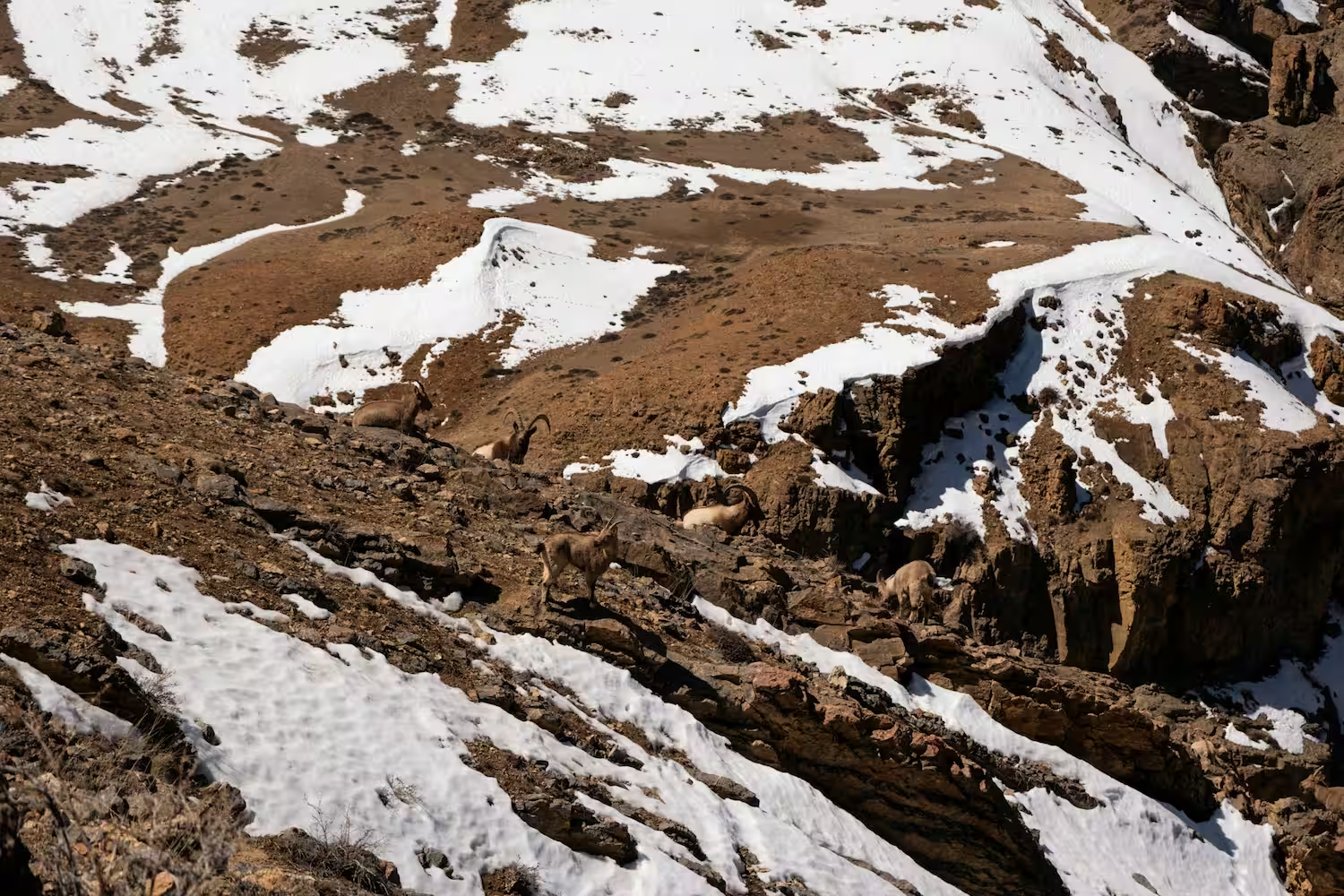
The Himalayan ibex is one of the most important prey animals for snow leopards across Central Asia, particularly in the ranges of the Altai, Tien Shan, and Pamir mountains.
These wild goats live on steep cliffs and rocky mountainsides – the same habitat the snow leopard has mastered. Adult males are large, strong, and confident on terrain that would kill most predators attempting to follow them. That confidence is occasionally their undoing. In many regions, particularly where bharal are absent, ibex form the backbone of the snow leopard’s diet and can account for more than half of all kills.
A successful ibex hunt can feed a snow leopard for several days, which matters in an environment where the next opportunity is never guaranteed.
Bharal (Blue Sheep)
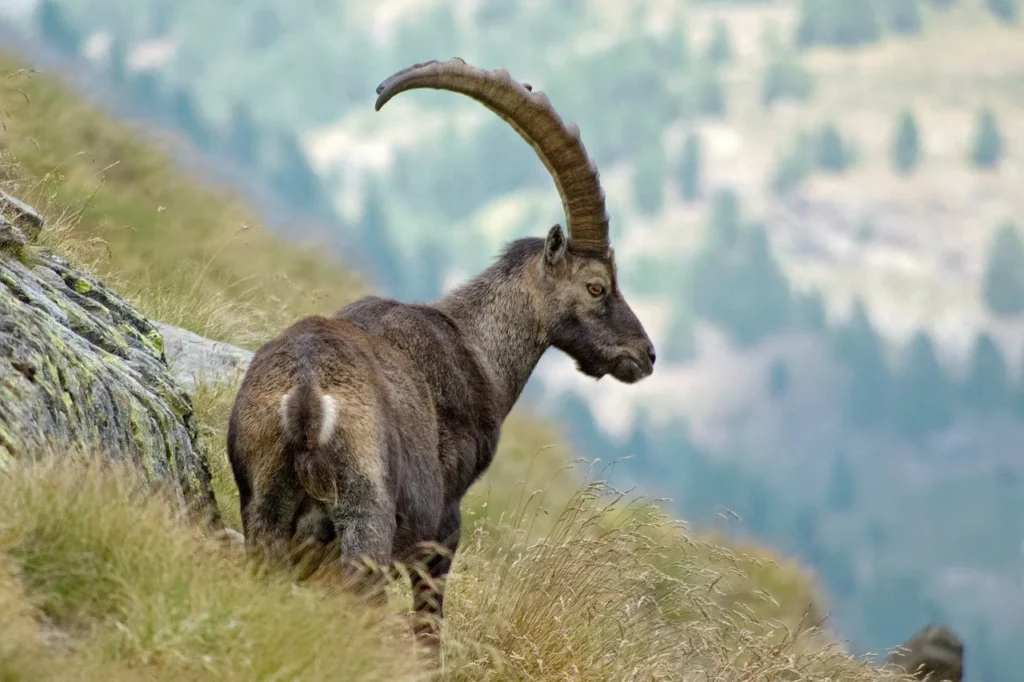
Bharal – commonly called blue sheep, though they occupy a space somewhere between sheep and goats taxonomically – are a primary prey species in the Himalayas, particularly across Ladakh, Nepal, and parts of Tibet.
They graze on high-altitude grasslands and blend almost perfectly with the grey-brown rocky slopes that dominate their range. The camouflage works well against most threats, but snow leopards have learned to read the terrain in ways that turn that advantage back around. They stalk silently, often from above, and close the distance before launching a short, explosive attack that relies on surprise rather than endurance.
In some Himalayan valleys, bharal make up seventy to eighty percent of the snow leopard’s diet. Where bharal populations remain healthy, snow leopards tend to persist. Where bharal decline, the cats struggle or disappear.
Argali
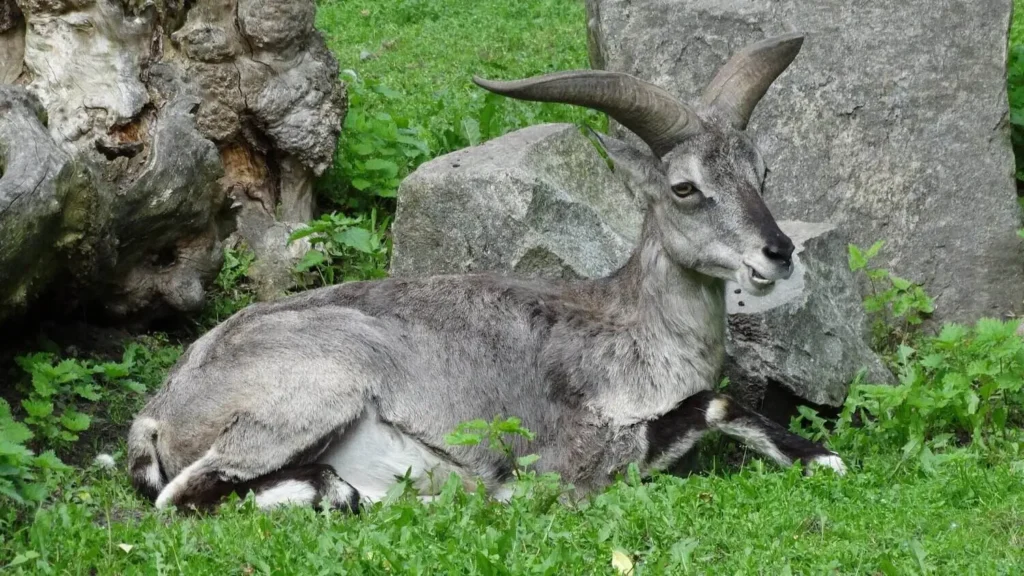
Argali are the largest wild sheep species in the world, and hunting one successfully requires a level of skill and physical capability that separates experienced snow leopards from younger or weaker individuals.
They inhabit open mountain valleys and high plateaus across Central Asia, particularly in Mongolia, Kazakhstan, and parts of western China. Their size makes them formidable prey – an adult male can weigh well over 100 kilograms – but a successful kill provides enough meat to sustain a snow leopard through multiple days of feeding, which is critical in landscapes where prey density is naturally low.
Argali populations have declined across much of their range due to habitat loss and competition with domestic livestock, which means they are no longer available everywhere snow leopards hunt. In areas where they remain common, they represent an important but challenging food source.
Himalayan Tahr
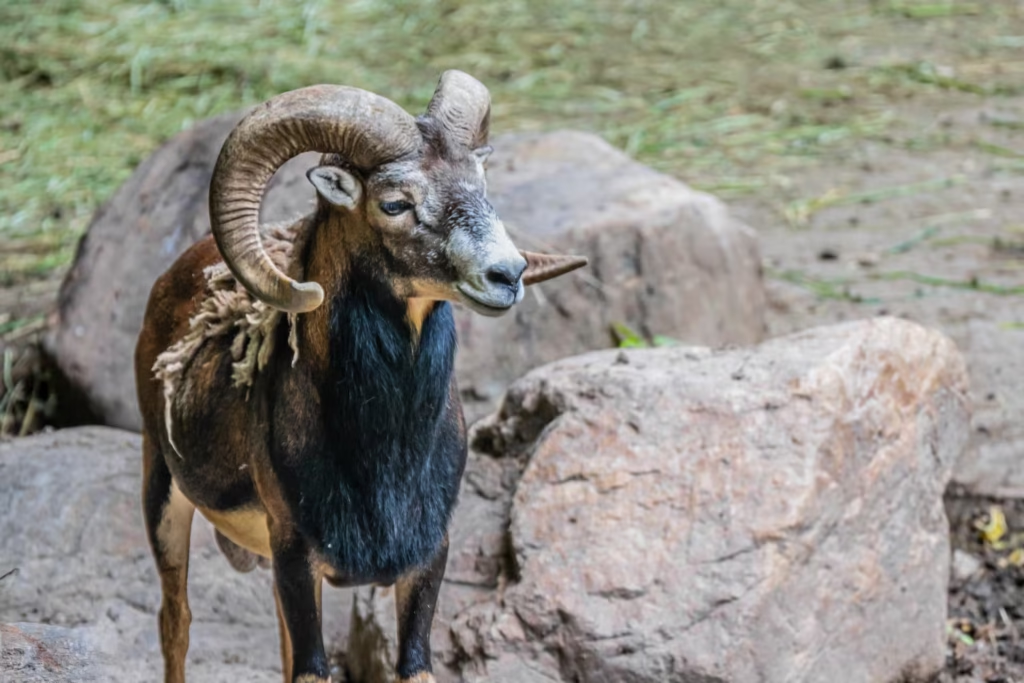
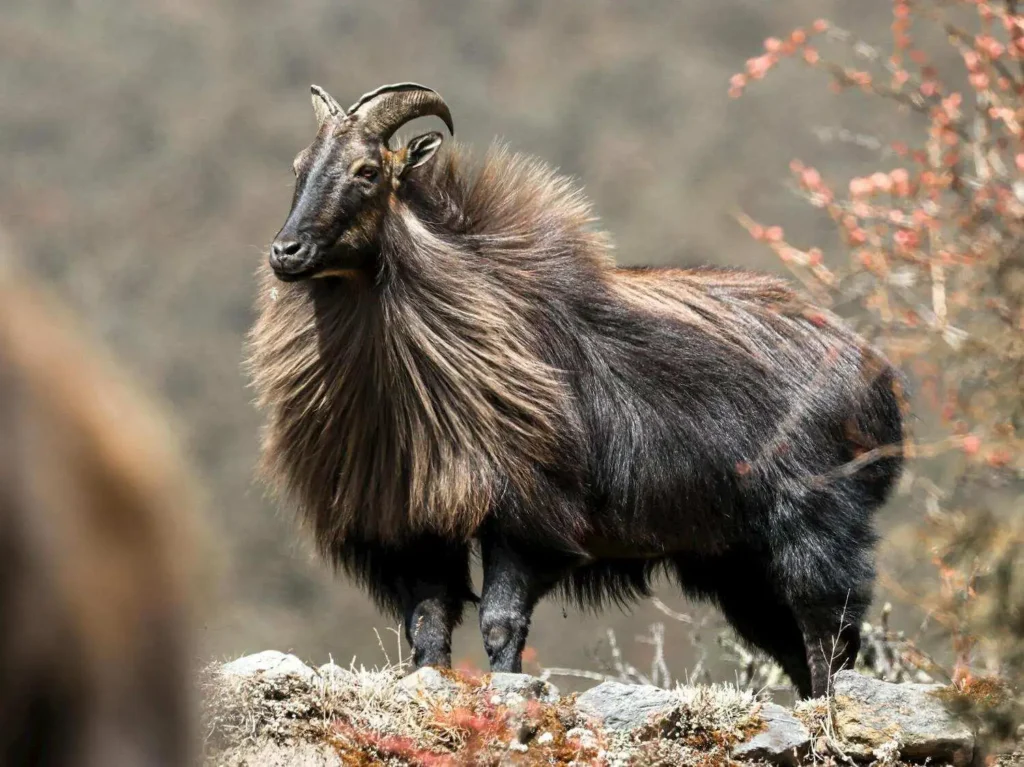
In certain parts of the Himalayas, especially across India and Nepal, Himalayan tahr become an important component of the snow leopard’s diet.
These stocky mountain ungulates live in rugged terrain and move in small herds that navigate cliffs and boulder fields with the kind of agility that makes them difficult targets. Snow leopards typically focus on weaker individuals, younger animals, or those separated temporarily from the group during movement across exposed ground.
Tahr are not as widespread as bharal, and their distribution is more limited to specific Himalayan ranges, but in the areas where they overlap with snow leopards, they provide a reliable and substantial prey option.
Marmot
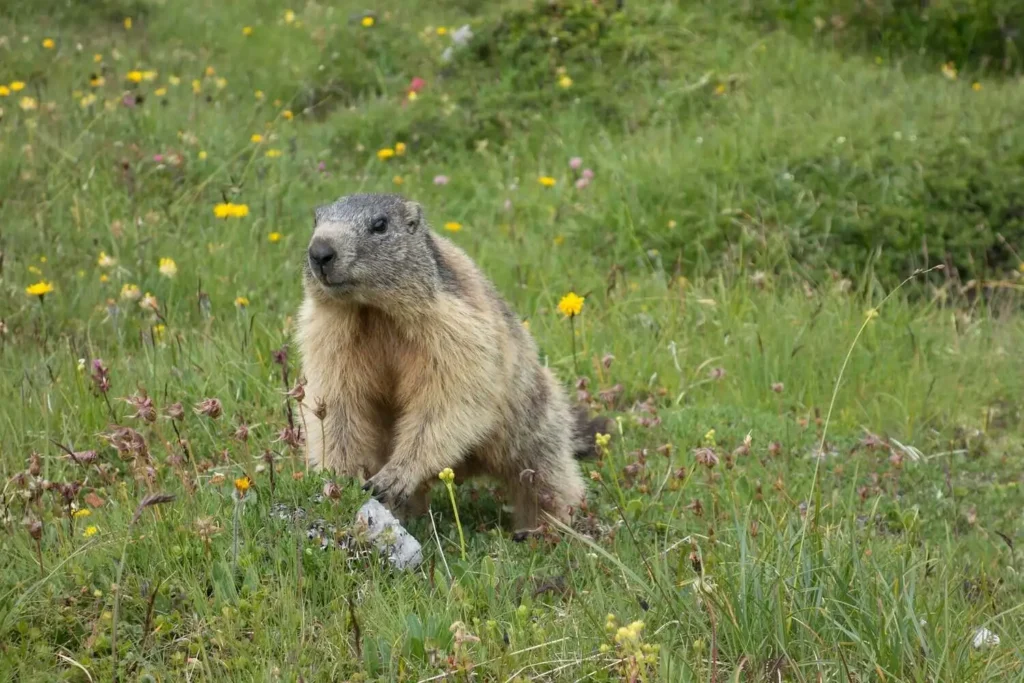
When larger prey is scarce or unavailable, snow leopards shift their focus to smaller animals like marmots.
Marmots are considerably easier to catch than mountain ungulates – they are slower, less vigilant, and far less capable of escaping across vertical terrain. However, they provide significantly less meat per kill, which means a snow leopard relying heavily on marmots must hunt more frequently than one with access to bharal or ibex.
During the summer months, when marmots emerge from hibernation and remain active above ground, they can become a regular part of the diet, particularly for younger snow leopards still developing the skills necessary to take down larger, more dangerous prey.
Opportunistic Hunting Beyond the Main Prey
Beyond these five species, snow leopards are opportunistic enough to take advantage of whatever is available locally. Himalayan musk deer appear in the diet in forested areas where the two species overlap. Domestic livestock – particularly sheep and goats – are killed in regions where wild prey populations have declined or where herders graze animals in snow leopard territory. Smaller mammals and occasionally birds are taken when nothing else presents itself.
The snow leopard’s diet is not fixed. It adapts based on what the landscape provides, which is part of what has allowed it to survive across such a wide range of mountain ecosystems.
Why Prey Populations Matter
Snow leopards are not built for long chases. They rely on terrain, camouflage, and explosive bursts of power across short distances. In the high mountains, where every calorie burned matters and every missed opportunity can mean days without food, successful hunts depend on the presence of healthy wild prey populations.
When wild ungulates decline due to poaching, habitat loss, or competition with domestic livestock, snow leopards either shift to livestock – which brings them into direct conflict with herders – or they disappear from the landscape entirely.
Conservation of the snow leopard is inseparable from conservation of its prey.
Final Thoughts
The snow leopard exists because the mountains still support the animals it depends on.
Ibex, bharal, argali, tahr, and even marmots are not just food sources. They are the reason a large predator can survive at altitudes and in conditions that would be impossible for most carnivores.
Understanding what the snow leopard hunts is understanding what keeps it alive – and what needs to remain in place for it to continue existing in the wild.